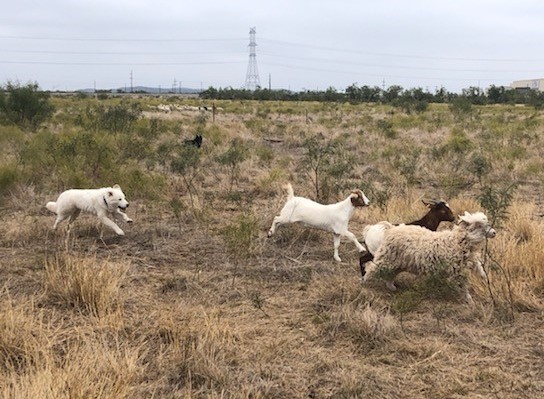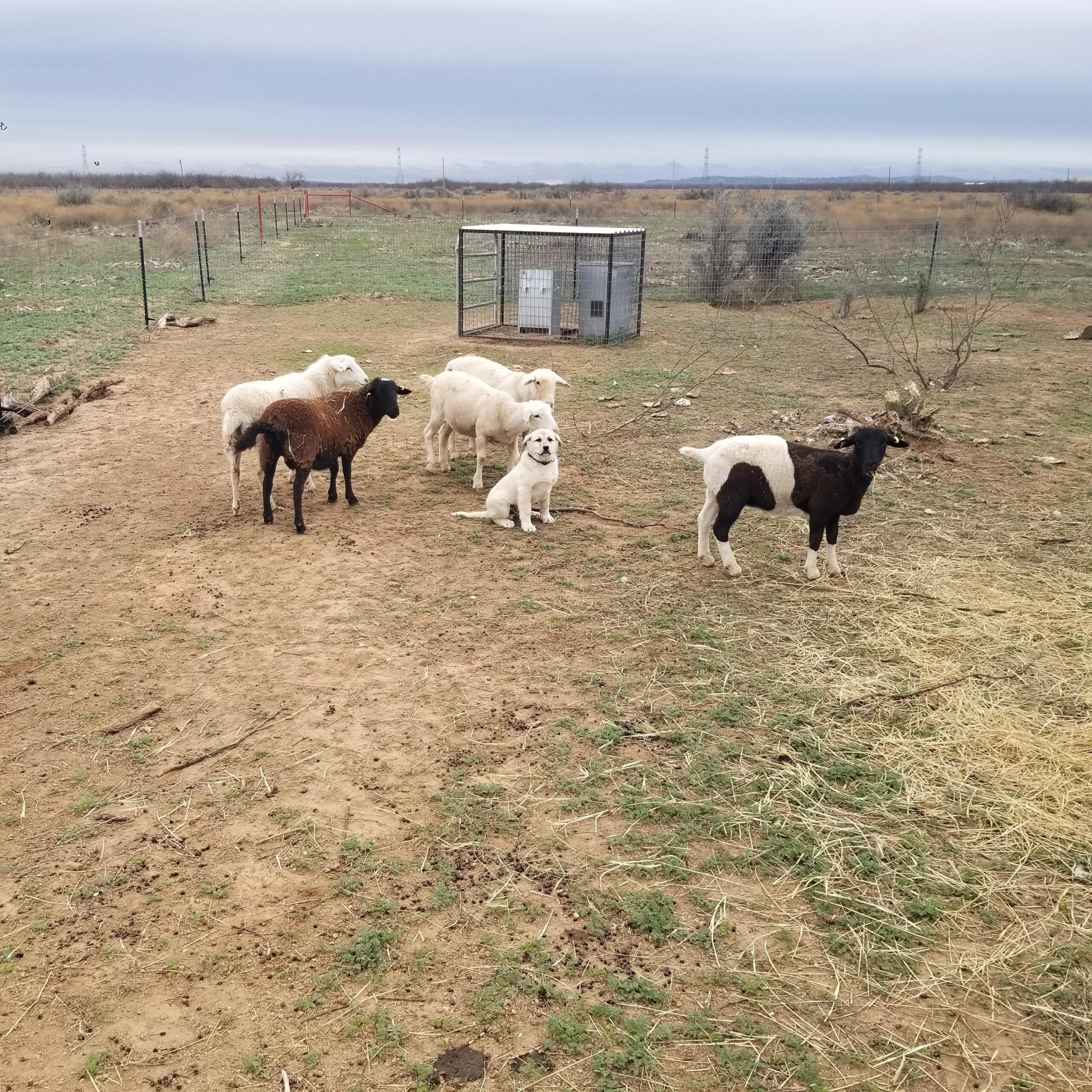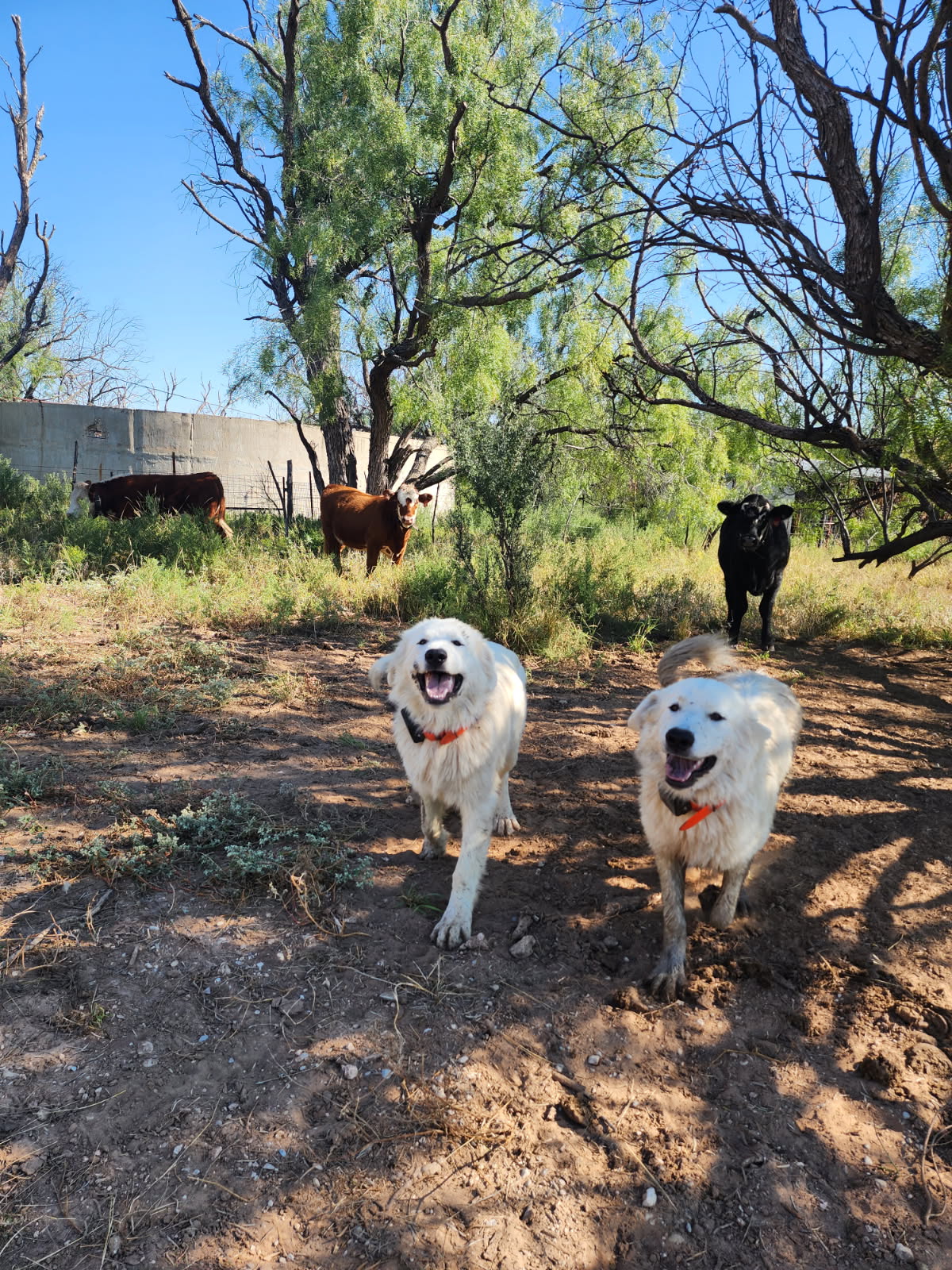
Well, we finally had some winter weather across the state in late January. I was thinking it would never come. I hope everyone’s LGDs and livestock made it through the storm unharmed. It is important to be prepared for livestock and LGD emergencies in winter weather. Having a warm, dry location for chilled animals is critical for their survival if they are suffering from hypothermia. Shelter with plenty of dry bedding is helpful for animals to survive weather systems like the one that covered most of Texas last month. Also, make sure to have lots of old towels to toss in the clothes dryer to warm up cold animals. Fresh water is just as important for livestock in freezing weather as in warm weather. Investing in tank heaters and Freeze Misers can help keep water troughs and lines running.
AgriLife Livestock Guardian Dog Program: Update and Events

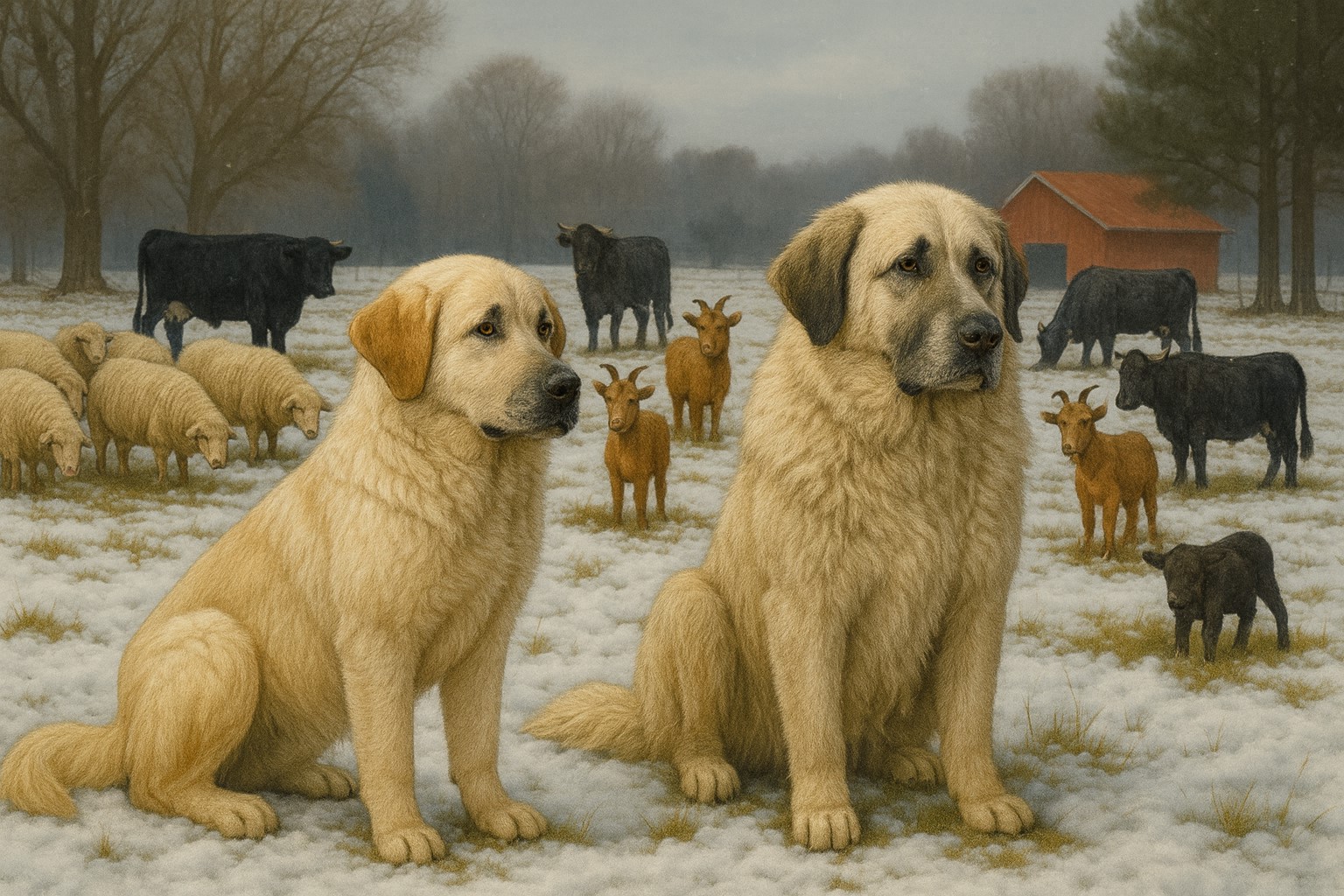
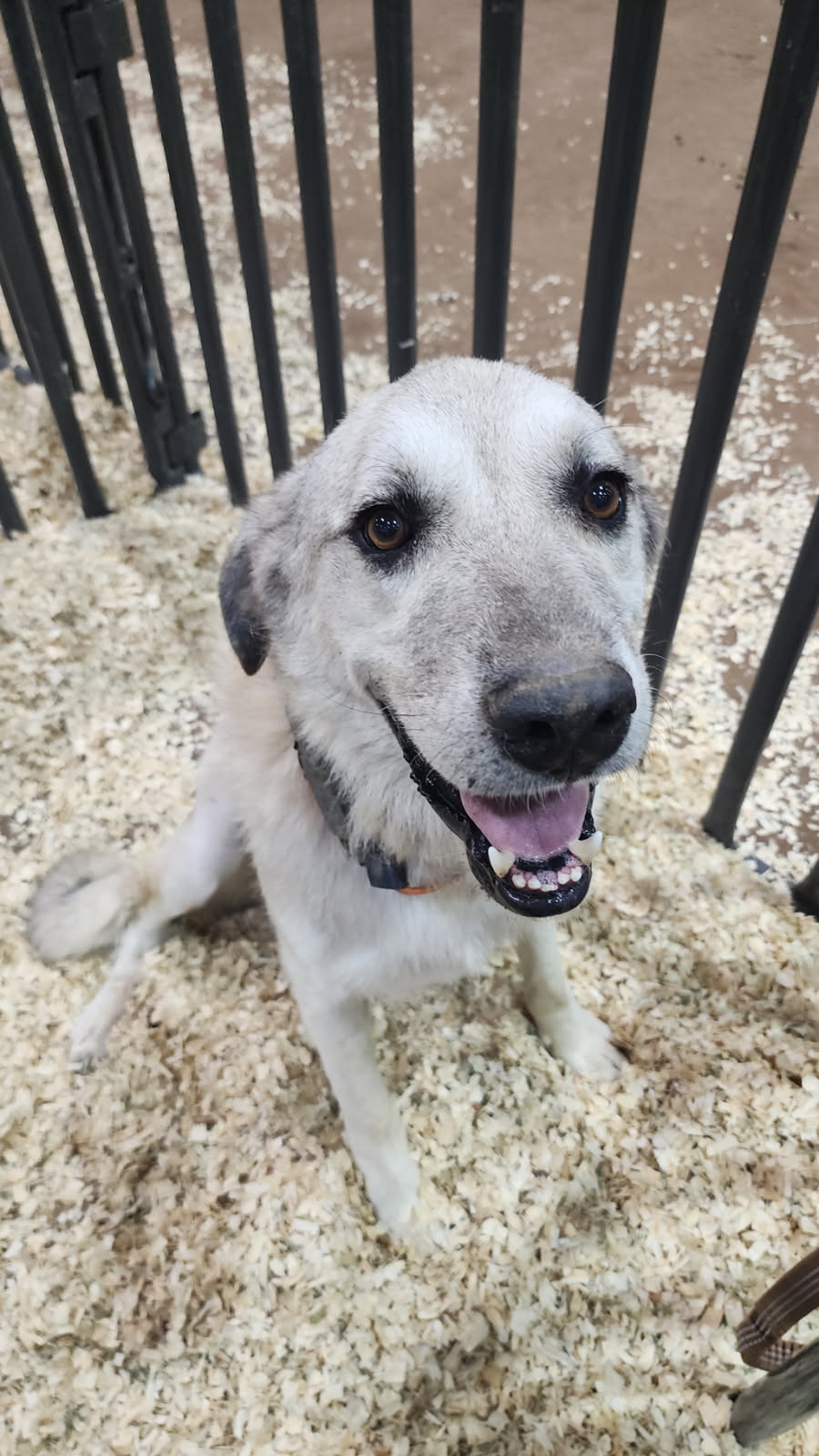
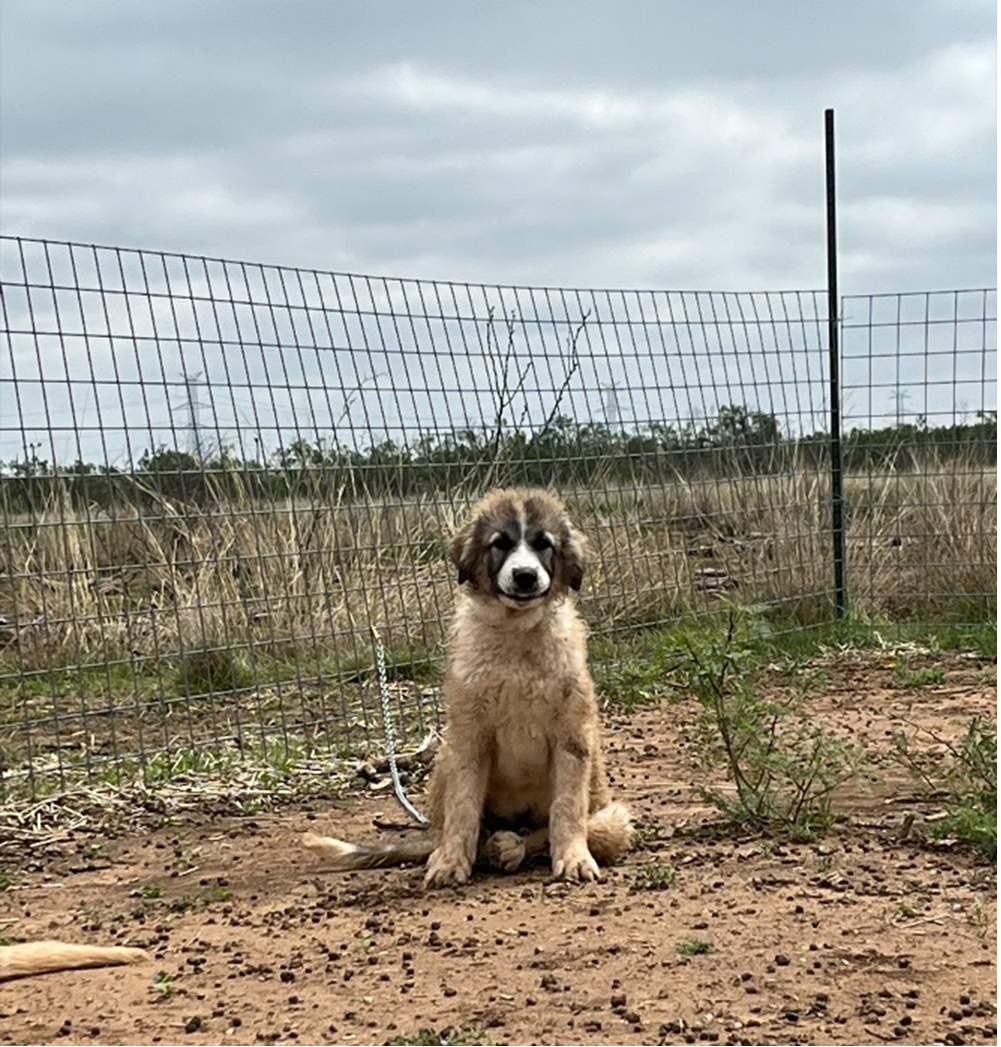
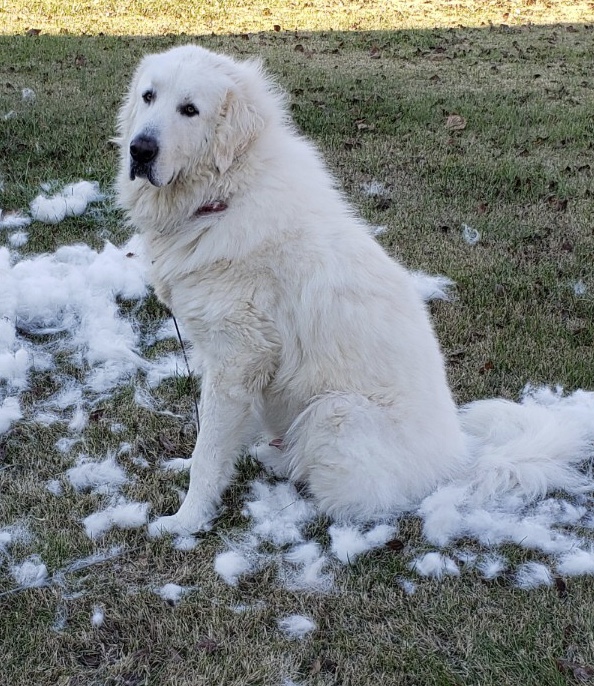
Pyrenean Mastiff dog. AgriLife photo courtesy of the Pyrenean Mastiff Association of America, 2026.
Our next webinar is scheduled for February 19th at 3 pm. This quarter’s webinar will be on the Pyrenean Mastiff breed of LGDs and will be presented by Karina Whittington from Estrella Polar Pyrenean Mastiffs. Check our Facebook page @TAMUlivestockguarddog to register for the free event hosted on Zoom or visit the Center’s events page to register.
Our 9th Annual LGD Field Day will be held on May 1st at the AgriLife Center in San Angelo. The event will feature workshops, a tour, vendors, and LGD breeders on site. The Texas LGD Association and the Texas Sheep and Goat Predator Board will give presentations at the event, along with experts in LGD research. Check our Facebook page @TAMUlivestockguarddog for more information as the event gets closer. We will be doing online registration for the event this year, which is now open using this link: https://agriliferegister.tamu.edu/ansc-ev-095
New Bonding Project
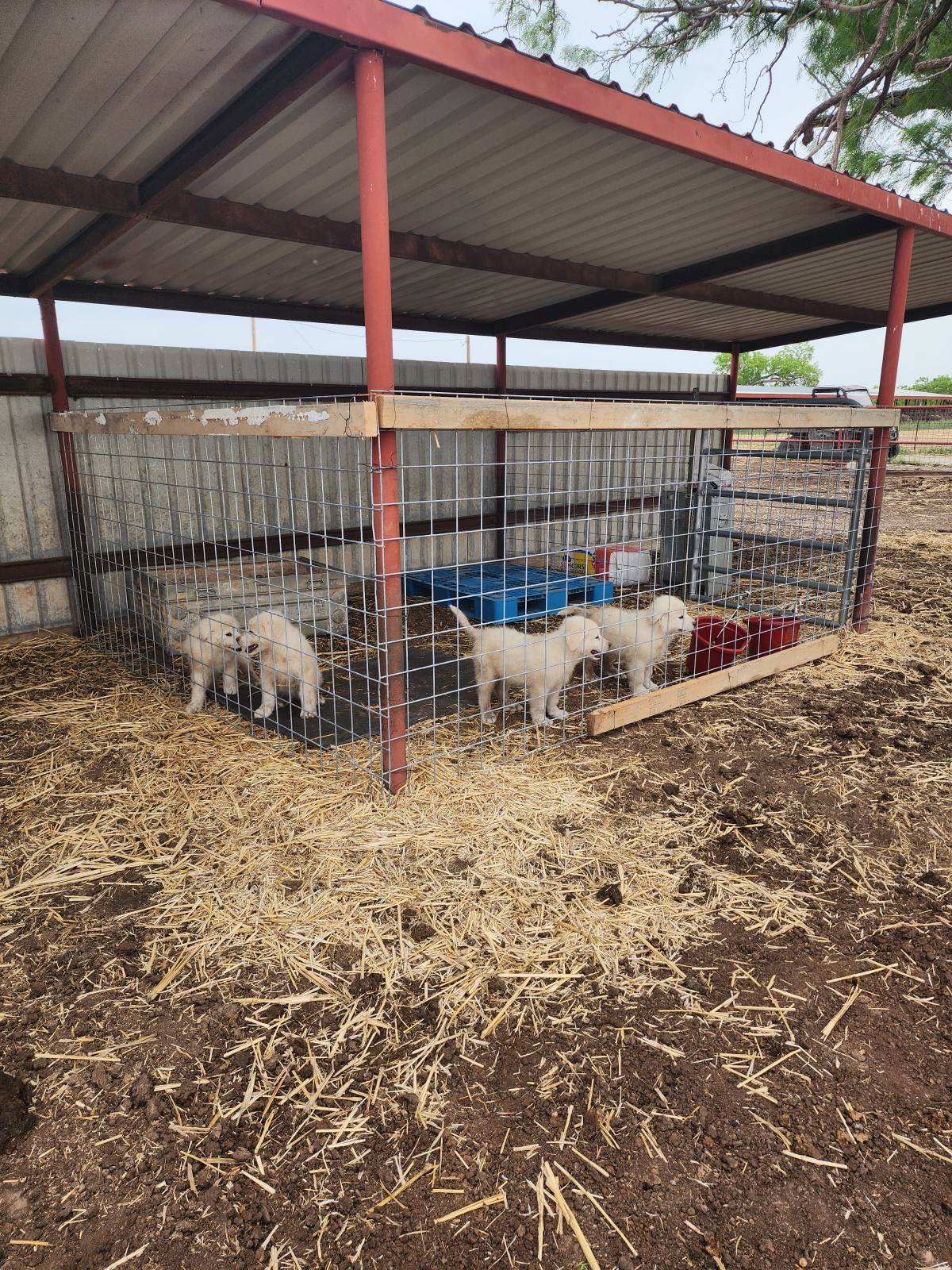
We have transitioned the LGD Program from San Angelo to College Station over the past couple of years. With the main grant funding the program ending in the summer of 2025, I was reassigned to a split position between AgriLife Extension and Prairie View A&M. I am starting a new program at the International Goat Research Center on the Prairie View campus farm. This change has allowed me to continue bonding pups while we secure funding to start a program at the TAMU Sheep Unit in College Station.
We are starting a new round of the bonding and training project in March. The facilities at Prairie View A&M are finally being completed to house dogs and livestock at the International Goat Research Center. We will begin the first of what we hope will be five rounds of the Aerial Threat Training and Bonding Project this spring. The project is a joint venture among the Texas Sheep and Goat Predator Management Board, Texas A&M AgriLife Extension, and Prairie View A&M.
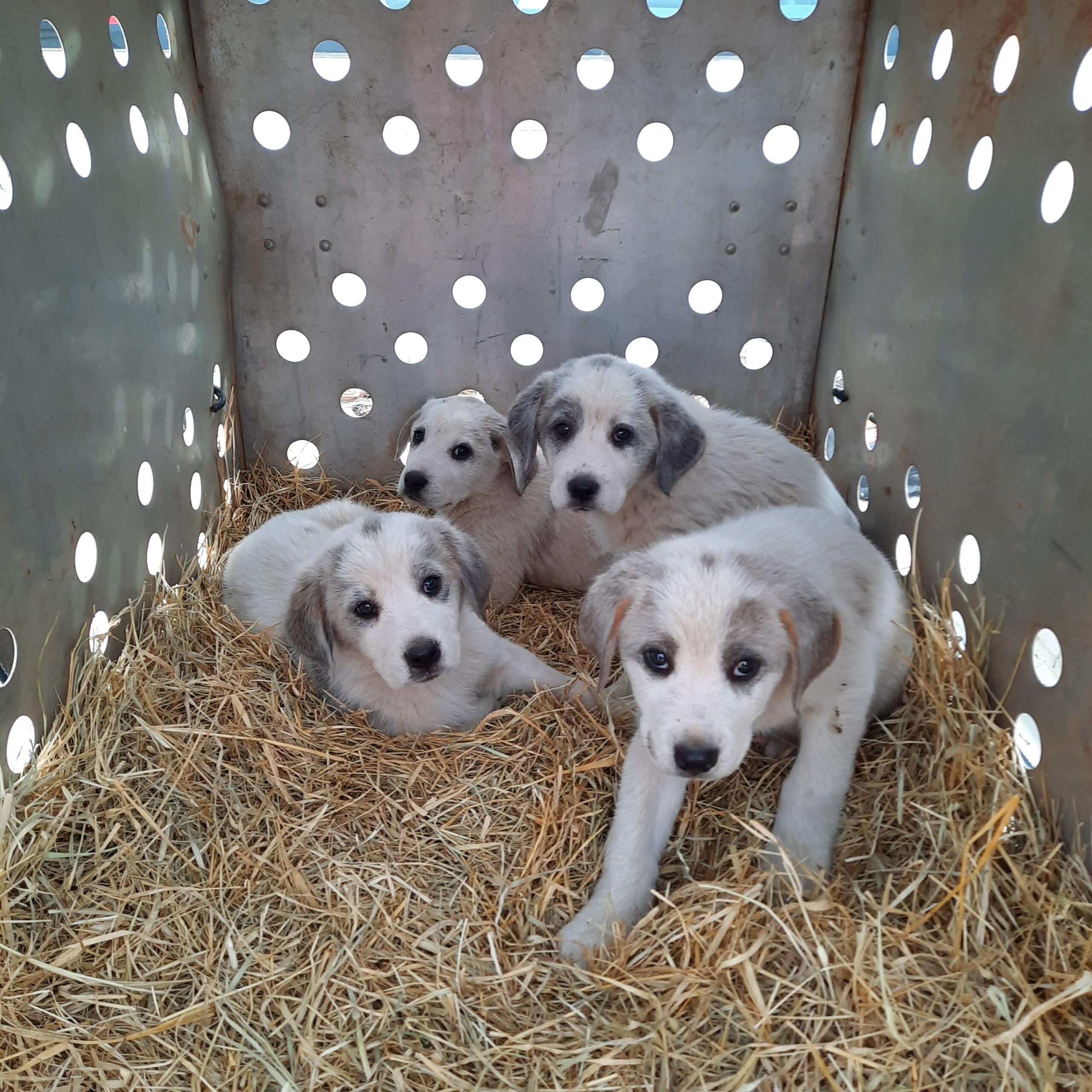
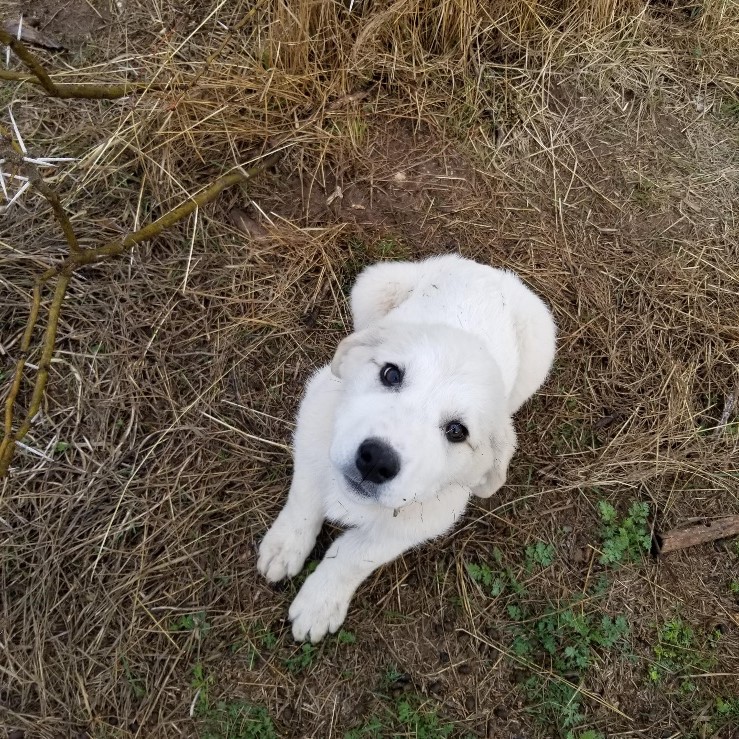
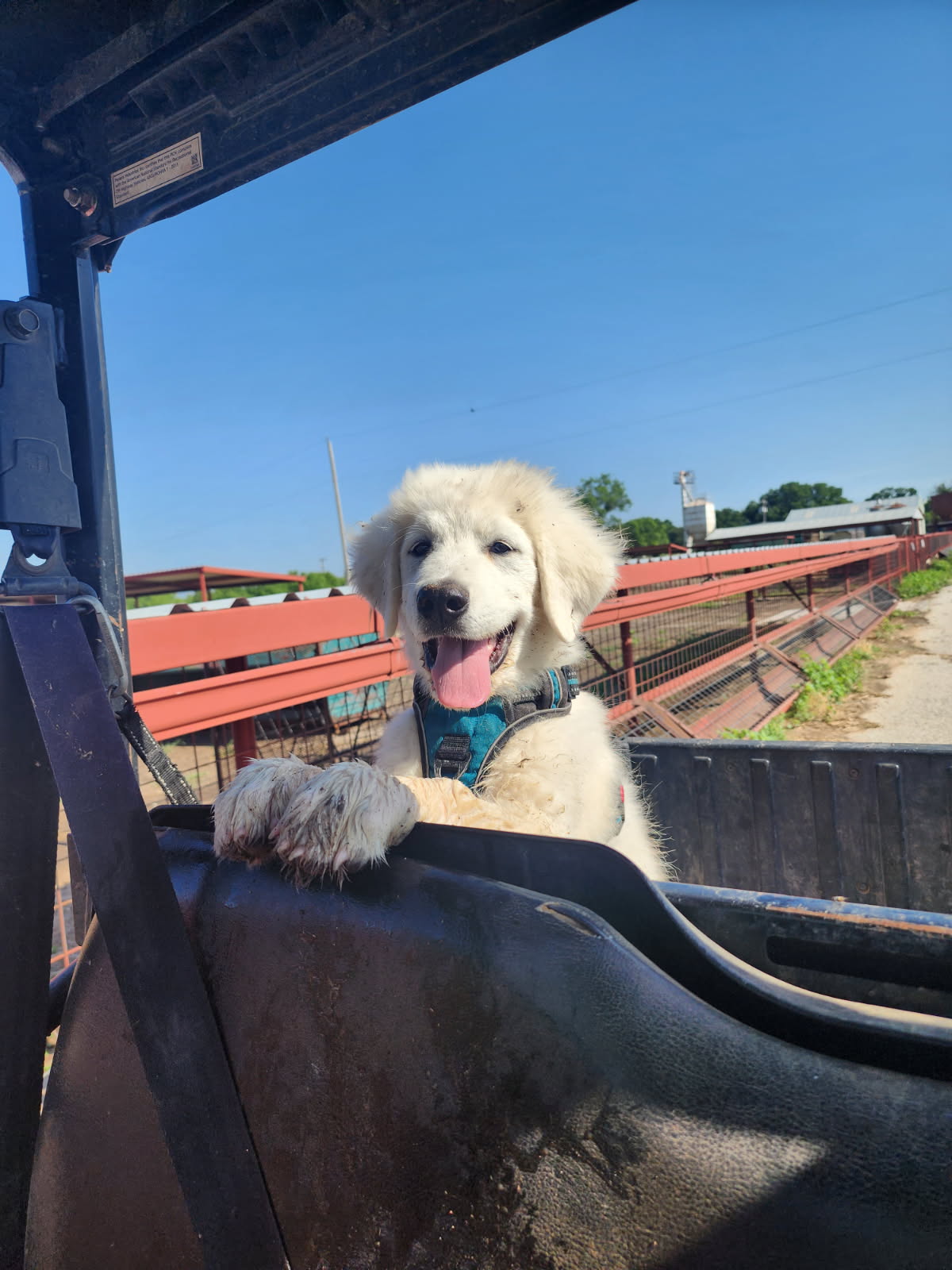
We will bond and train six puppies for each round of this project. We have a set of ¾ Akbash X ¼ Anatolian Shepherd pups and a set of

Potential raptor-shaped drone for training LGD puppies. AgriLife photo courtesy of the Drone Bird Company, 2026.
purebred Karakachan pups this time. The puppies will be single- or pair-bonded, as in previous years. They will also receive hot-wire and virtual fence training to reduce roaming as adults. Three of the pups will receive additional training for aerial predator threats. The training will include using various devices to harass the puppies and livestock in the bonding pens. We will use kites, small remote-control raptors, aerial decoys, a raptor-shaped drone, and real falcons for the project.
As in the past, puppies will stay in a 60 x 60 ft pen for one month, then move into one-acre pens until they are 6 months old. At that point, they will move to larger pastures until they are 10 months old. At that time, they will be taken to cooperating producers’ ranches and GPS tracked until they are 18 months old. We will perform tests to see if the training was successful at 8, 12, and 18 months of age. Producers will be able to purchase the dogs then or return them if they are not satisfied. If the initial round is successful, we will make any necessary adjustments and continue the project for four additional rounds.
Adult Dogs and Bonding Project Update
Round 7 Pups

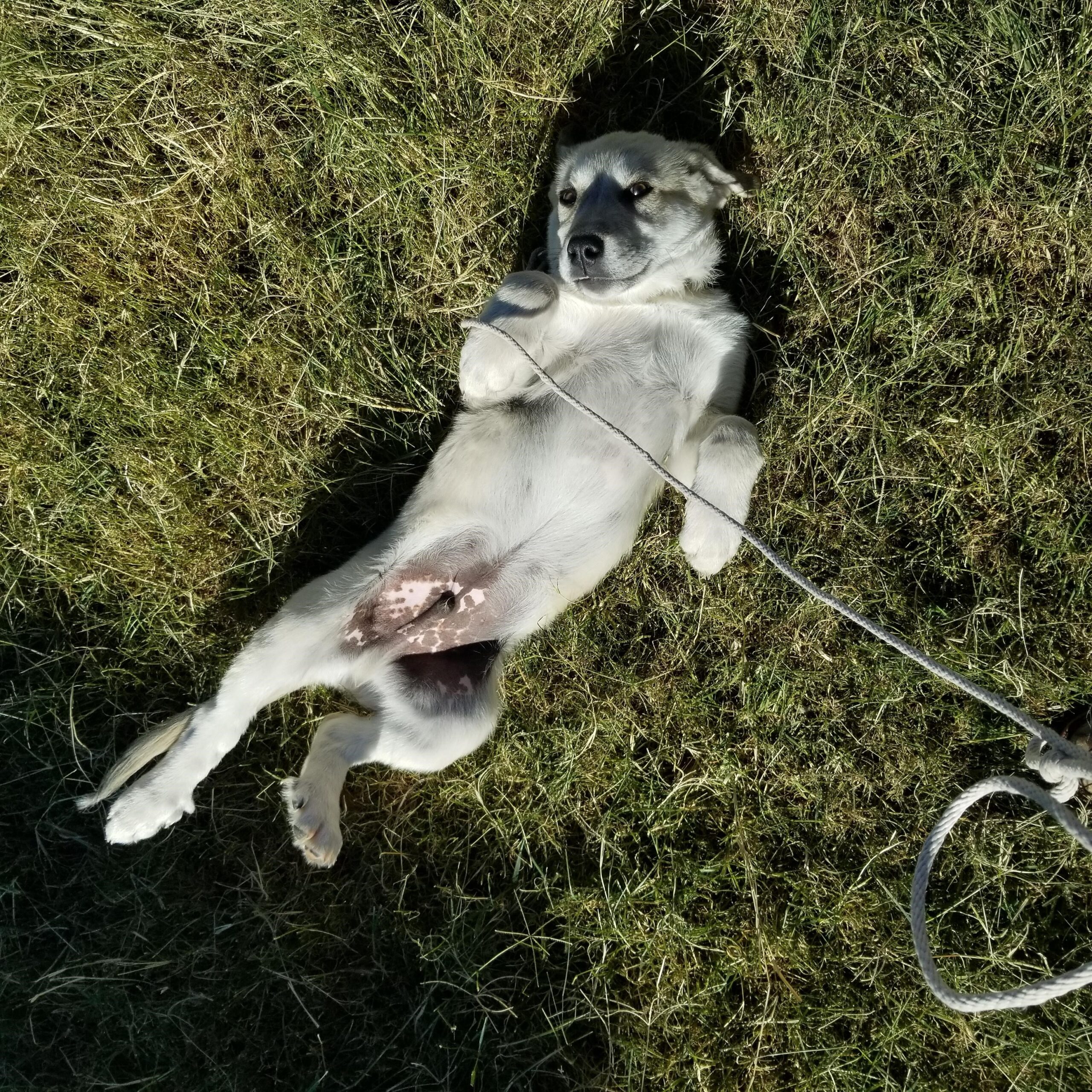
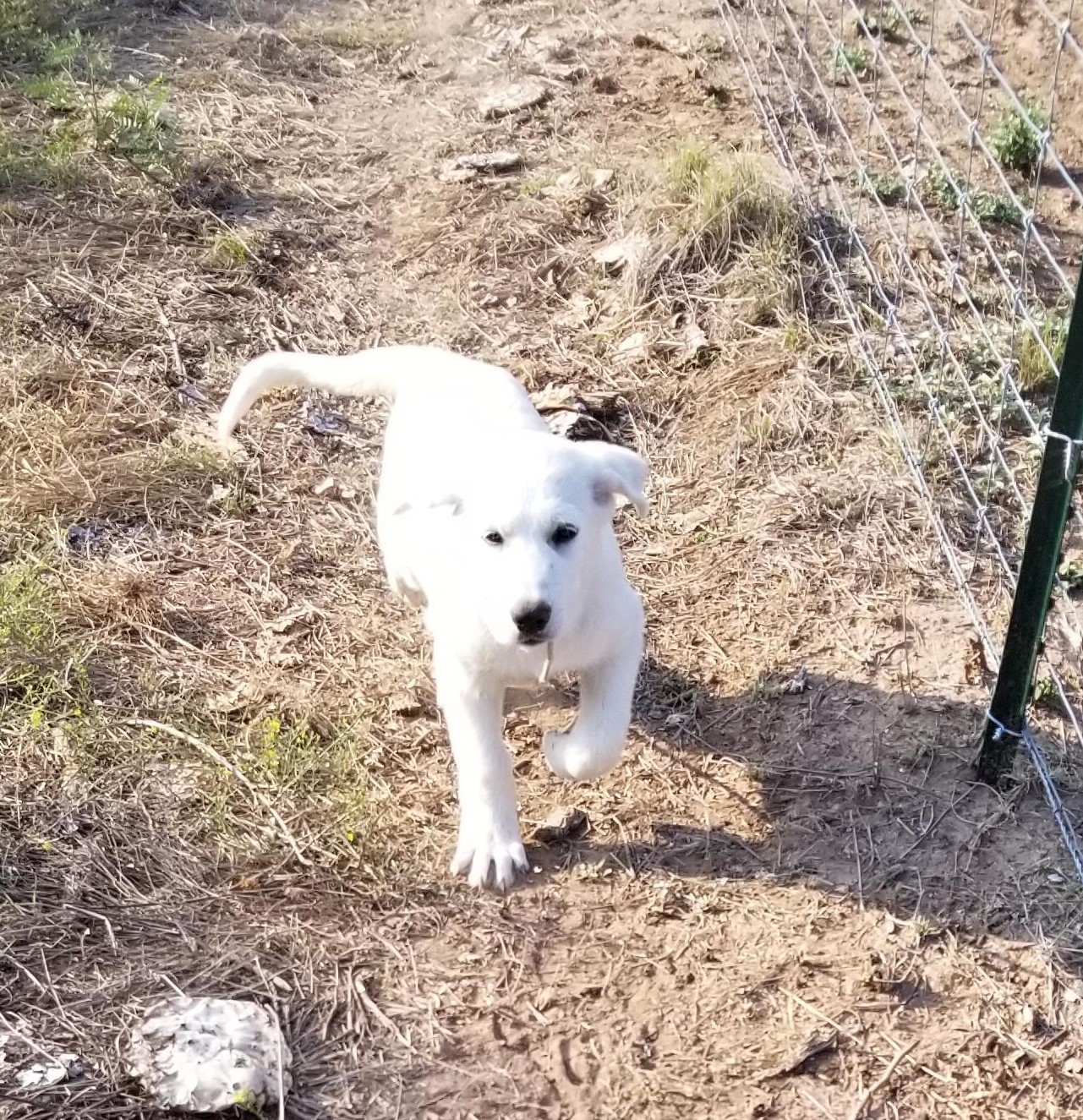
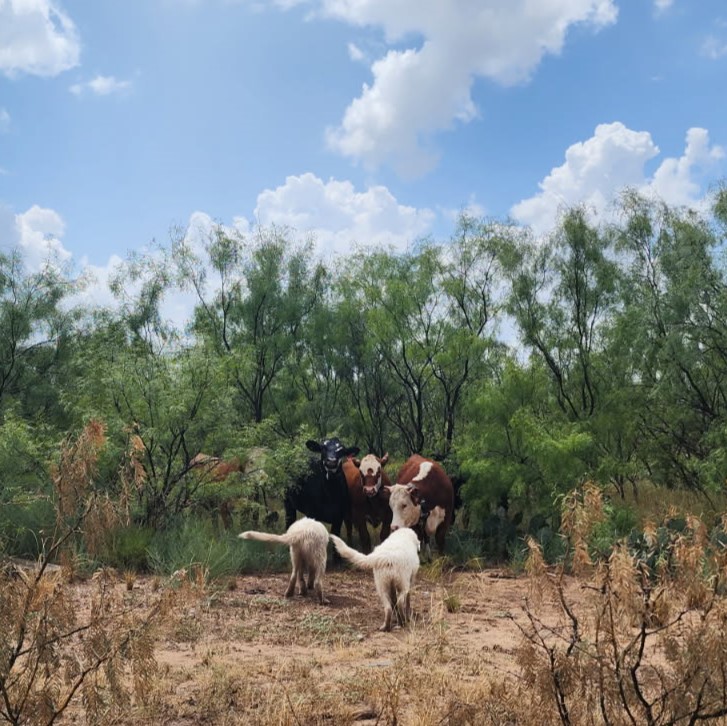
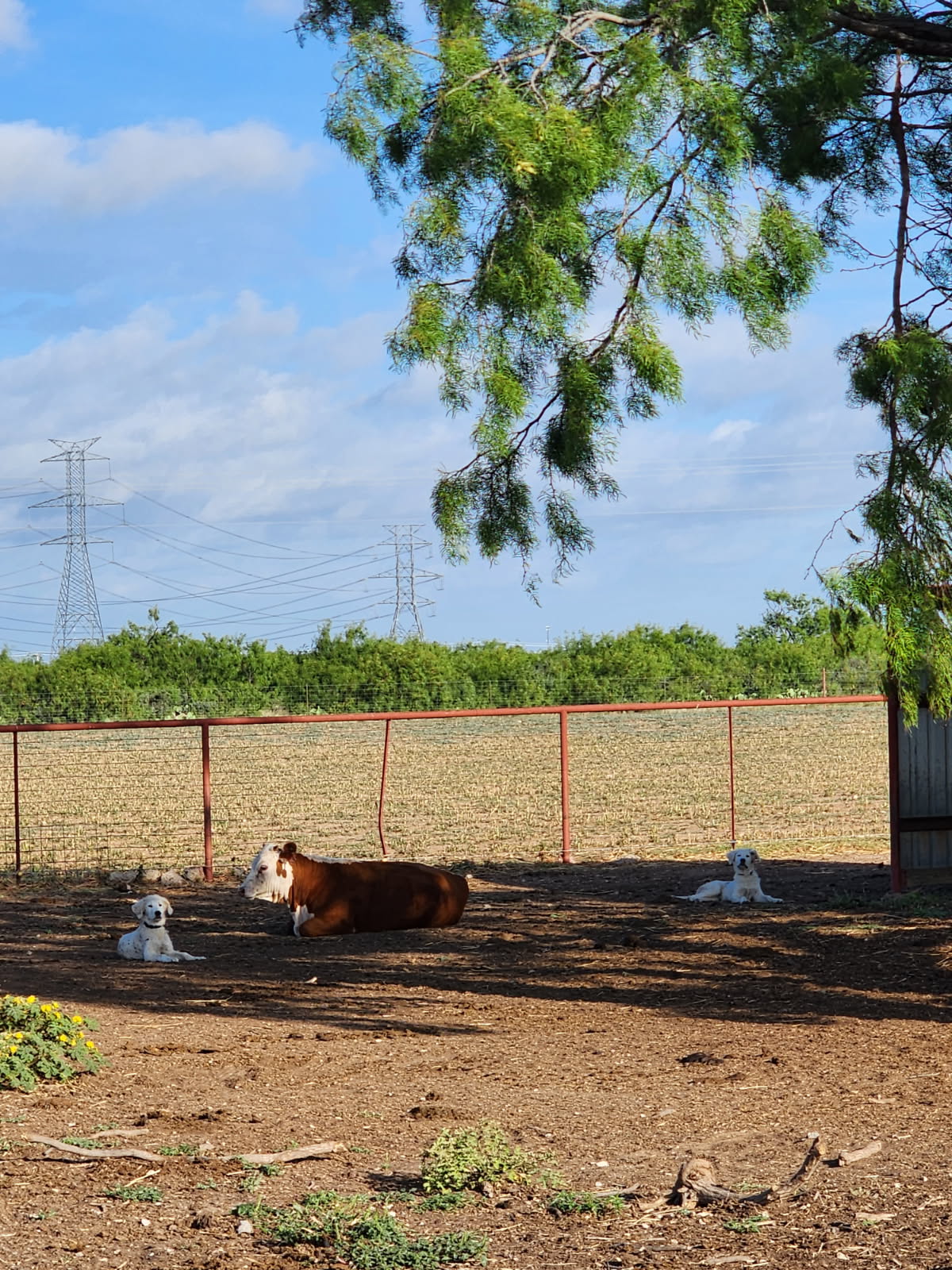
Two of the Maremma pups spending time together in their pasture at the AgriLife Center in San Angelo. AgriLife photo courtesy of Sustaita, 2026
The pups are still doing well. We have started adjusting them to new cattle by removing half of the calves they were bonded to and introducing new mature cows to the dogs. Delta and Diesel seem to be accepting their new cattle more readily than Duke and Dozer. The dogs seem to be following their charges’ lead, however. The cattle in the Delta and Diesel groups quickly accepted the cows into their herds, whereas those in the Duke and Dozer groups did not, which may explain why the dogs are also pushing the cattle away from their original charges.
We will continue to move out all of the original group of calves so they can go back to their home university, Sul Ross. We are gradually switching out the calves so the dogs do not roam to find the original charges they were bonded to. Duke and Dozer, along with their cattle, are scheduled to return to a bonding pen for a couple of weeks. This will ensure that they rebond and that the cattle accept the dogs and each other.
We have noticed that Duke and Dozer are actively tracking and chasing any aerial threats that come over their pasture. However, Diesel and Delta are not. There are fewer aerial predators over their pasture for some reason. This could be the reason, or it could be something we do not know yet. Since all the pups are from the same litter, it is unlikely to be the mother’s training, but it could be genetic. Hopefully, we will be able to determine the answer with our next bonding project, which starts soon at Prairie View A&M. The pups are still scheduled to leave the Center in March of this year for far northwest Texas. If you are in Dallam County, TX, Cimarron County, OK, or Union County, NM, and are interested in participating in this unique project, please contact me at bill.costanzo@ag.tamu.edu.
In closing
If you enjoyed this monthly LGD blog, please remember to subscribe using this link: The Guardian Way | Texas A&M AgriLife Research and Extension Center at San Angelo.
Do you have any feedback about this article, or would you like to propose topics for future articles, webinars, or workshops? Please do not hesitate to contact me at bill.costanzo@ag.tamu.edu or 325-657-7311.
Are you seeking information on LGDs? Please visit our website, which features factsheets, global research on LGDs, and case studies we have conducted.
Follow us on our social media platforms and share them with your friends and family!
Facebook, Instagram, YouTube: TAMUlivestockguarddog
 Be sure to visit the Texas LGD Association online! You can follow the organization on Facebook or YouTube under @TexasLGDAssociation or visit its website.
Texas A&M AgriLife provides equal opportunities in its programs and employment to all persons, regardless of race, color, sex, religion, national origin, disability, age, genetic information, veteran status, sexual orientation, or gender identity. The Texas A&M University System, the U.S. Department of Agriculture, and the County Commissioners Courts of Texas Cooperating.